
The export of gold, cocoa, and mineral fuels combined to power Ghana’s export trade in 2025, culminating in a higher trade surplus for the West African country, according to the latest data released by the Ghana Statistical Service (GSS) on Thursday.
According to the 2025 Annual International Merchandise Trade Statistics Report released by the GSS, Ghana recorded a trade surplus of 11.5 billion U.S. dollars, about three times the surplus recorded in 2024.
From a total trade value of 52.5 billion dollars, the report said exports and imports totaled 32 billion dollars and 20.5 billion dollars, respectively.
“From international merchandise trade, gold, cocoa products, and mineral fuels accounted for 85.9 percent of Ghana’s exports in 2025.” Gold alone generated 252.4 billion cedis (21.6 billion dollars), representing nearly 63 percent of total export earnings,” the report stated.
According to the report, the West African cocoa, gold, and crude oil exporter strengthened its global presence last year by importing from 216 countries, up from 211 in 2024, and exporting to 163 countries, up from 155.
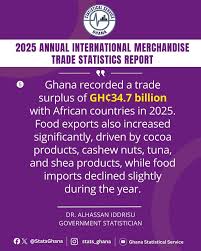
Moreover, it said Asia remained Ghana’s largest trading region, while exports to Africa reached more than double the value of imports from the continent, “reinforcing Ghana’s position as a net exporter within Africa.”
At the individual trading partner level, the report singled out China as Ghana’s largest source of imports in 2025, accounting for 57 billion cedis (4.87 billion dollars), as both countries continue to deepen their already strong bilateral and economic ties.
In its latest briefing on July 22, the Bank of Ghana stated that the country’s gross international reserves stood at 12.9 billion dollars by the end of June, down from 13.8 billion dollars last December. Central bank Governor Johnson Asiama gave the assurance that “Our reserves won’t be depleted.” The trade balance is in surplus; the capital account is also in surplus, and we have many other avenues through which to rake in more foreign exchange should the situation in the Middle East remain permanent.”