
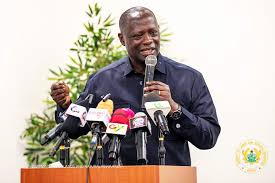
The government of Ghana will sustain its efforts to mitigate climate change through continued tree planting and nurturing under the annual Tree for Life Reforestation Initiative, Lands and Natural Resources Minister Emmanuel Armah-Kofi Buah pledged on Friday.
Buah said during the commencement of the 2026 Tree-for-Life Reforestation Initiative that this year’s activity would not only be focused on the planting of trees but also the post-planting care for the tree seedlings.
“For this reason, the 2026 edition of the tree planting program will place a strong emphasis on post-planting care, monitoring, and maintenance,” Buah pledged.
The launch coincided with World Environment Day, observed annually on June 5 as the United Nations’ foremost platform for environmental awareness and action, and the minister highlighted the unprecedented environmental challenges around the globe.
He cited rising temperatures, extreme weather events, biodiversity loss, pollution, and land degradation that threaten the well-being of humanity and ecosystems worldwide.
Across Ghana, Buah said, “We are witnessing the effects of climate change through rising temperatures, erratic rainfall patterns, prolonged droughts, flooding, coastal erosion, declining forest cover and the degradation of critical ecosystems. These impacts threaten food security, water resources, public health, livelihoods, and economic growth.”
“The scientific evidence is clear. Climate change is no longer a future threat; it is a present reality. The response required must therefore be immediate, collective, and sustainable,” he urged.
Despite these challenges, the minister reiterated Ghana’s enduring commitment to environmental sustainability, climate resilience, and the sustainable management of the country’s forest and wildlife resources, with the Tree for Life Reforestation Initiative standing as one of the flagship interventions by the government.
Launched in 2025, the initiative seeks to mobilize all Ghanaians towards restoring the country’s degraded landscapes, increasing national tree cover, combating desertification, protecting watersheds, and contributing to Ghana’s climate commitments, added the minister.
Following the success of the program in 2025, the minister said, the target for 2026 is to plant and nurture at least 30 million tree seedlings of various varieties across the country.
“The true measure of success is not the number of seedlings planted but the number of trees that survive and mature. A tree planted and neglected contributes little to environmental restoration. A tree planted, nurtured, protected, and allowed to grow becomes a lasting investment in our future,” he stressed.
In a message, the United Nations Development Program (UNDP) commended Ghana for its commitment to environmental restoration and climate action, noting that the country has already planted over 30 million trees under the Tree for Life initiative.
UNDP also lauded Ghana’s bold target to restore two million hectares of degraded landscapes by 2030 and pledged continued support for programs that promote forest restoration, climate resilience and sustainable livelihoods.
The initiative was launched by President John Dramani Mahama in June 2025 as a flagship national program to restore degraded lands, increase forest cover, and strengthen Ghana’s response to climate change.
The annual program is marked by the distribution of tree seedlings across the country to farmers, non-governmental organizations, private sector, schools, and communities for planting and nurturing.