
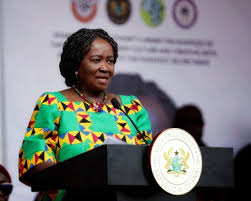
Ghanaian Vice President Jane Naana Opoku-Agyemang on Tuesday urged Africa to take charge of its food security future by designing and implementing deliberate programs that transform Africa’s food production potential into reality.
Opoku-Agyemang said during the West Africa Rice Investment Roundtable, organized by the subregional bloc Economic Community of West African States (ECOWAS), the World Bank Group, and the government of Ghana, that Ghana is ready to work with all partners to advance this regional agenda.
“The future of African food security must be grown in African soil, financed by beneficial partnerships, powered by African enterprise, and sustained through regional integration,” the vice president stressed., adding that Beyond Rice, the meeting is also about economic transformation, regional integration, and Africa’s capacity to feed itself with dignity and confidence, even in an uncertain world.
The Ghanaian vice president highlighted that food security transcends agricultural concerns. “It is connected to macroeconomic stability, social protection, and national security amid global challenges, including climate vulnerabilities and geopolitical tensions.”
Amidst these challenges, she said West Africa possesses fertile land, water resources, entrepreneurial farmers, growing consumer markets, and one of the youngest populations in the world, which are great potentials for sustainable agricultural development for food security.
“Despite our economic potential, Africa still spends well over 50 billion U.S. dollars or more annually on food imports, with rice accounting for a significant share of that import bill. Rice has become one of the most consumed staple foods across West Africa, with demand rising rapidly, and West Africa alone imposes millions of tonnes of rice every year,” Opoku-Agyemang remarked.
The challenge before the subregion, she said, is not just about growing more rice but also about mobilising the scale of capital required to invest and transform agriculture from a subsistence sector to commercial production and integrated value chains, urging the subregion to see rice as a strategic economic asset.
She said this required treating agriculture as a key development project, investing in everything from irrigation to processing, research, and climate-friendly production, while also using this sector to boost regional trade through the African Continental Free Trade agenda.
“Our ambition is to build more competitive, inclusive, and sustainable agrifood systems that strengthen food sovereignty, create economic opportunities, contribute to shared prosperity, and progressively achieve regional rice self-sufficiency by 2035,” ECOWAS Commission President Omar Alieu Tourey said in his opening remarks.