
The government of Ghana on Monday ruled out a blanket nationalization of the mining assets of multinational mining companies operating in the country.
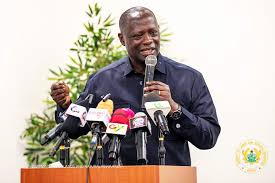
In an interview after a meeting with the Ghana Chamber of Mines, Lands, and Natural Resources Minister Emmanuel Armah-Kofi Buah confirmed that the government is dedicated to keeping the mining sector stable, clear, and welcoming to investors, and that Ghana does not have a policy or plan to take over the mining assets of multinational companies in a blanket manner.
Instead of a blanket decision on mining companies, Buah said the government would continue to deal with each case on its own merit as dictated by the legal and regulatory framework while pursuing the primary objective of protecting the national interest.
Buah assured the stakeholders in the mining industry that the West African cocoa, gold, and crude oil exporting country remains open to investors based on “win-win” cooperation to ensure that both the investors and the local economy reap the intended benefits.
He reiterated the government of Ghana’s commitment to continue working hard to deepen the enabling environment that is predictable, transparent, and rules-based to attract more mining investments into the country.
“Our goal is to grow Ghana’s own capacity while we partner with investors who understand that, beyond their profits, they must also add value to our local mining industry. So, that is really the fundamental policy of Ghana,” the minister stressed.
This policy, Buah explained, is primarily aimed at ensuring a sustainable mining sector, which assures sustainable returns for investors; promoting technology transfer and expertise development; improving local content and capacity-building; and creating opportunities for local mining communities.
Buah’s assurances came amid perceived delays in the renewal of the mining lease for Gold Fields Ghana Limited, a large South African-based multinational mining company operating in Ghana.
Kenneth Ashigbey, Chief Executive Officer of the Ghana Chamber of Mines, pointed out the necessity for Ghana to ensure the security of tenure for mining leases in the country to build goodwill for the local industry and indigenous Ghanaian mining firms.
“The national mining champions we create today are tomorrow’s multinationals,” Ashigbey remarked, cautioning that if Ghana does not demonstrate a willingness to partner and co-exist with international investors, “the door will be closed to our national champions when they are ready to expand into other territories as multinationals.”