
The Ghanaian parliament late Friday passed the Appropriation Bill approving a proposed government expenditure of 357,105,639,080 Ghana cedis for 2026 fiscal year.
The passage of the Bill is in line with Article 179 (2) of the 1992 Constitution, which requires that expenditure estimates of public offices be included in an Appropriation Bill to provide for the issue of funds from the Consolidated Fund and other public sources to meet government expenditure.
An Appropriation Bill is a proposed law that specifies the exact amounts of government money to be spent on programmes, services, and activities.
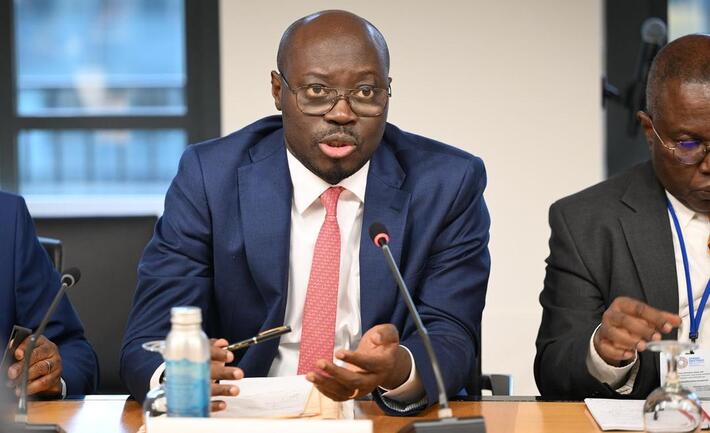
The approval capped six weeks of budget debate and scrutiny of estimates following the presentation of the 2026 Budget Statement and Economic Policy by Cassiel Ato Baah Forson, the Minister of Finance, on November 13, 2025.
During the debate, Forson said the Mahama-led administration had managed the economy prudently, ensuring strategic debt management without borrowing from the Bank of Ghana.
He outlined key allocations, including GH¢13.1 billion for goods and services, GH¢63.3 billion for the National Health Insurance Fund, District Assemblies Common Fund, Youth Employment Agency, and Minerals Development Fund.
Also, GH¢3.4 billion allocated for social services such as the capitation grant, Livelihood Empowerment Against Poverty (LEAP), and the school feeding programme.
Additionally, the capital expenditure had risen from GH¢30 billion to GH¢57 billion while GH¢29.8 billion had been earmarked for payment of road contractors’ arrears.
Minority Leader Alexander Afenyo-Markin, criticised the government for failing to implement the three-job shift policy, which he said had worsened youth unemployment and illegal small-scale mining.
Similarly, Abdul Kabiru Tiah Mahama, New Patriotic Party Member of Parliament for Walewale, faulted the government for allocating only GH¢3 billion to social interventions while budgeting GH¢90 billion for the Office of Government Machinery.
Through this process, Parliament ensures that the government spending aligns with national development priorities and fiscal policies.
GNA