
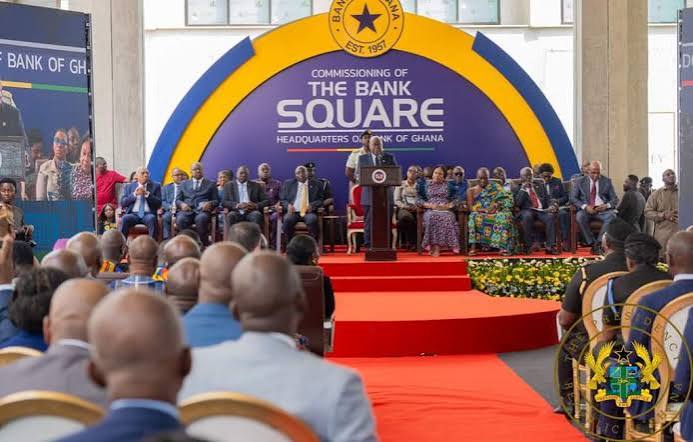
Ghana’s central bank on Wednesday convened its 132nd Monetary Policy Committee (MPC) meeting in Accra, the country’s capital, amid ongoing domestic and external pressures that threaten the modest macroeconomic gains made by the country recently.
The West African cocoa, gold, and crude oil exporter Ghana faces a double-edged external situation with higher gold prices ensuring support for export earnings, reserve accumulation, and government revenue, while the passthrough effects of higher energy and fertilizer import costs could quickly result in surging transport expenses, production costs, and consumer prices.
Moreover, the 132nd meeting is the first since the executive board of the International Monetary Fund approved the country’s Policy Coordination Instrument in July, which is expected to influence decisions by the MPC.
Inflation, which had fallen to 4.6 percent in July, resurged to 5.0 percent in August, which Johnson Asiama, the central bank governor, described in his opening remarks as well below the medium-term target of between 6.0 percent and 10 percent. Ghana also recorded a Gross Domestic Product (GDP) growth of 6.0 percent in the second quarter, led by services and information and communication technology.
While private sector credit also accelerated sharply over the period between July and September, requiring close policy monitoring, Asiama said a strong primary surplus above target and debts at 45 percent of GDP gave the country a solid fiscal position.
Externally, however, according to the governor, Ghana’s gross international reserves fell to 11.07 billion U.S. dollars (from 12.94 billion dollars in June), representing 4.2 months of import cover, with the current account projected to record a deficit in the third quarter as gold shipments slowed and service payments went up.
“The domestic position affords policy space; the external position determines how much of it can safely be used. Rebuilding net foreign assets must therefore remain the priority heading into the fourth quarter,” he highlighted during the opening of the MPC meeting.
The weaker current account position, the decline in reserves, and the pause in gold exports by GoldBod since mid-August, the governor noted, call for a careful look at the country’s buffers ahead of the usual rise in foreign exchange demand in the fourth quarter.
Furthermore, whether the current policy rate of 14 percent can hold inflation down and how fiscal developments in the rest of the year would interact with monetary policy are some of the key issues confronting the committee over the two-day period of the meeting.