
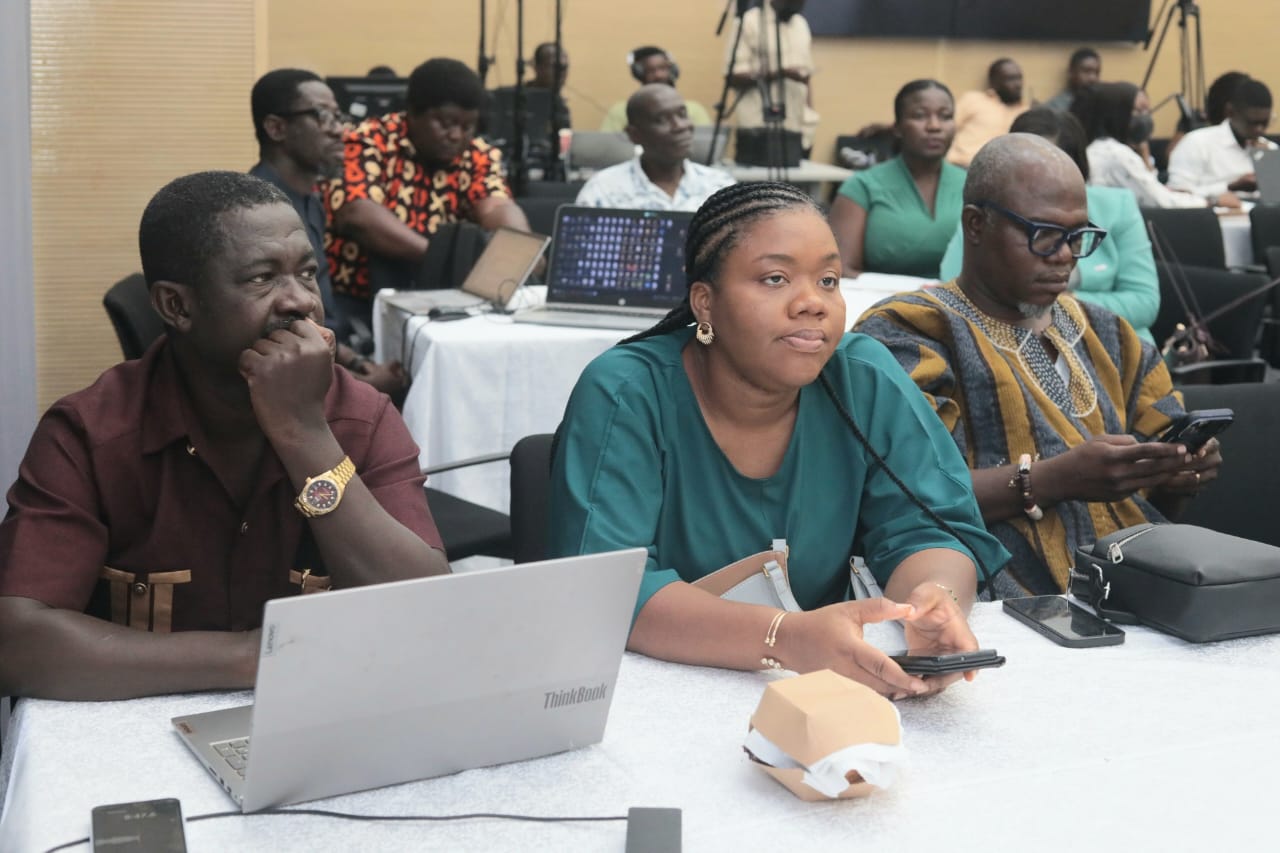
MTN Ghana has trained media practitioners and Civil Society Organisations (CSOs) on the use of artificial intelligence (AI), in a capacity building activity.
The training, held at MTN House in Accra and streamed virtually, brought together journalists and civil society representatives to look at what AI can do, where it falls short, and how to use it responsibly.
Facilitators were Samuel Adranyi, CEO and Founder of Afrilogic Solutions, Nehemiah Yelu Attigah, CEO of HatuaTech and Kwame Manu, Senior Manager, Digital Analytics and Monetization at MTN Ghana.
Participants were taken through effective prompting and shown how tools such as ChatGPT can support research, content development, data analysis and everyday workflow. They were also introduced to the limits of AI systems, including how prediction engines work and the risk of “AI hallucinations,” where a system generates information that sounds convincing but is inaccurate. Facilitators told participants to verify any AI-generated output rather than take it at face value.
Efua Falconer, Acting Senior Manager, Corporate Communications at MTN Ghana, in her welcome address said the pace of change in technology made it necessary for professionals to understand AI and adapt to it. “We all agree that our environment is changing and that technology is impacting the way we live and work,” she said, encouraging participants to ask questions and engage the facilitators, since people were at different stages of learning about AI.
She added that MTN Ghana considers the media and civil society key stakeholders and is committed to involving them in conversations around emerging technologies and their implications.
Kwame Manu, Senior Manager, Digital Analytics and Monetisation at MTN Ghana, urged participants not to be intimidated by the complexity of AI but to remain curious and continue learning about its concepts and applications.
He highlighted the growing role of data analytics and automation in business, explaining that these technologies help organisations understand customer behaviour, automate routine processes and make predictions about future trends.
He stressed that these advancements must be accompanied by responsible practices around privacy, ethics and accountability.
Speaking on how MTN is leveraging AI within its operations, Mr Manu said the company’s AI journey is closely aligned with the MTN Group’s strategic digital agenda. He explained that MTN is evolving from basic reporting systems to advanced predictive analytics and prescriptive engines capable of delivering hyper-personalised customer experience bundles.
To build this digital transformation, Manu outlined four key areas of collaboration. These include partnerships with government and public institutions to leverage mobility data for policymaking and disease tracking; collaboration with universities such as the University of Ghana to establish specialised AI research squads and retain local talent; engagement with STEM education partners to provide structured mentorship opportunities for young people; and collaboration with AI startups and media organisations to develop inclusive solutions that address African realities.
Samuel Adranyi spoke on the practical side of AI use, focusing on prompting techniques and how professionals can apply AI tools to improve research, content development and productivity at work.
Nehemiah Yelu Attigah addressed responsible AI use, stressing that technology should work alongside human judgment, critical thinking and professional oversight, not replace them.
Data privacy featured strongly in the discussions. Participants were cautioned against entering sensitive or confidential information into free, consumer-facing AI platforms, given the risks to data security.
On fact-checking, facilitators urged participants to independently verify AI-generated information and images before publication, and to watch out for deepfakes, manipulated images and other content that could spread misinformation.
For journalists and CSOs in particular, the facilitators noted, these checks matter because of the role both groups play in informing the public and shaping how people understand issues.
The training session was meant to show how AI can support the work of media and civil society professionals, while making clear that it should complement, not replace, human expertise and accountability.