
Cote d’Ivoire is determined to make aquaculture a strategic lever for food sovereignty and sustainable growth, Minister of Animal and Fisheries Resources Sidi Tiemoko Toure has said.
Fishery and aquaculture products constitute the main source of animal protein in Cote d’Ivoire, with annual consumption exceeding 20 kg per capita, the minister told Ivorian media Wednesday. He was attending the Paris International Agricultural Show, where the country is the guest of honor.
“National production remains largely insufficient to meet demand estimated at 650,000 tons annually, compared to local supply of around 110,000 tons, resulting in a structural deficit of more than 80 percent,” he said.
The imbalance has led to heavy reliance on frozen fish imports, at nearly 400 billion CFA francs (about 721 million U.S. dollars) a year, Toure said. “This situation weakens food security and increases pressure on natural fishery resources.”
He said the government will take steps to reposition aquaculture at the heart of its blue economy strategy.
“These actions focus on the sustainable valorization of maritime and lagoon resources, biodiversity preservation, the creation of green jobs, and reducing pressure on capture fisheries,” Toure said.
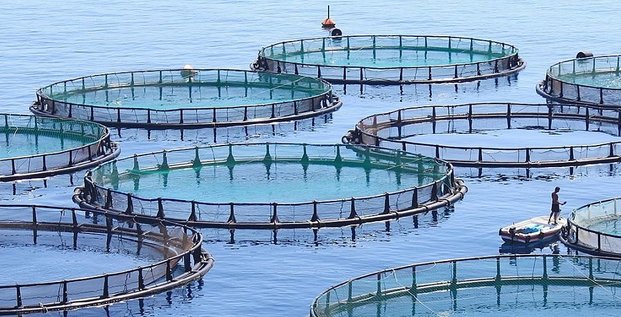
Official statistics show that Cote d’Ivoire has 550 km of coastline, 150,000 hectares of lagoons, 350,000 hectares of lakes, and four major rivers, offering favorable conditions for various systems such as ponds, floating cages, above-ground tanks, and dams.
The country currently has 1,076 fish farms and six public hatcheries producing various species, including tilapia, catfish, red carp, mullet, Nile perch, as well as crustaceans and mollusks.
Despite these assets, aquaculture production reached only 9,915 tons in 2024. “Given the domestic production deficit, the fisheries sector requires greater private sector engagement,” Toure said.